


5 Customer Support Mistakes Killing App Success
A smooth app interface isn’t enough to keep users loyal anymore. Statista reports that over 57% of users uninstall an app within 30 days if they encounter friction or confusion. That friction often comes down to one thing and poor customer service ranks among the top reasons apps fail despite cutting-edge features. With AI, chatbots, and advanced analytics redefining app support in 2026, developers who ignore these tools risk losing users to competitors who do it better.
Mobile apps are no longer just products they’re experiences. Users demand fast, personalized, and seamless support. Failure in customer support doesn’t just affect retention it impacts your app’s ratings, downloads, and revenue growth.
Here’s a deep dive into the five critical customer support mistakes that are silently killing app success and actionable strategies to fix them.
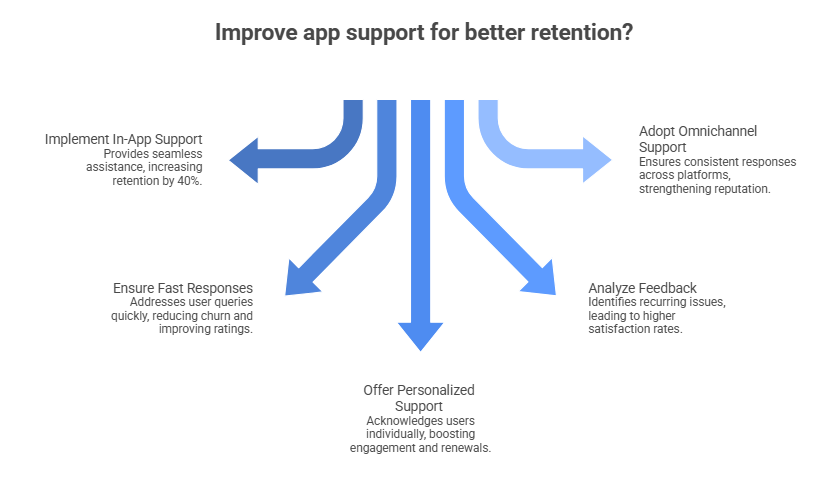
1. Skipping In-App Support
Providing support outside the app is no longer acceptable. Users expect assistance without leaving the app interface. A report revealed that 78% of app users prefer solutions accessible within the app itself, including chatbots or live chat.
Why This Fails Apps:
- Forcing users to switch apps or visit external websites breaks engagement.
- Delayed responses create frustration and increase churn.
How to Improve:
- Implement AI-driven chatbots or human-assisted live chat inside the app.
- Offer contextual help, such as tutorials triggered when a user struggles with a feature.
- Use push notifications to guide users through common pain points proactively.
Apps that integrate seamless in-app support see up to 40% higher retention rates.
2. Slow Responses Damage Loyalty
Modern users expect near-instant help. Microsoft’s 2025 customer service trends report shows over 60% of users abandon apps if queries aren’t answered within an hour. Speed is no longer optional it’s a core metric of app success.
Why This Fails Apps:
- Long response times create negative app reviews.
- Users may switch to competitors who provide instant solutions.
How to Improve:
- Use automated ticket prioritization for urgent issues.
- Enable real-time notifications to update users on ticket progress.
- Train support teams to handle high-frequency issues efficiently.
Apps providing quick support not only retain users but also improve overall app store ratings, which boosts discovery and downloads.
3. Impersonal Support
Generic responses alienate users in 2026. 84% of users value personalization as much as product functionality. Users want their issues acknowledged individually, especially if they are paying customers.
Why This Fails Apps:
- One-size-fits-all replies frustrate users.
- Users feel disconnected from the app brand, lowering loyalty.
How to Improve:
- Utilize CRM systems to track individual user interactions.
- Implement AI that pulls past activity to deliver personalized solutions.
- Address users by name and reference their specific issues.
Apps with personalized support see higher engagement and subscription renewals, particularly in competitive markets like fintech and health apps.
4. Not Learning from Feedback
Support isn’t just reactive it’s a treasure trove of insights. Apps often fail to analyze recurring problems, missing opportunities for improvement.
Why This Fails Apps:
- Persistent issues frustrate users repeatedly.
- Developers miss trends that could inform updates or new features.
How to Improve:
- Collect feedback using in-app surveys, reviews, and analytics dashboards.
- Track recurring issues and use insights for feature updates or bug fixes.
- Share feedback loops with your development team to proactively reduce support tickets.
Apps that implement feedback-driven improvements achieve up to 30% higher user satisfaction rates.
5. Limited Channel Support
Today’s users interact across multiple platforms social media, messaging apps, app stores, and email. Ignoring any of these channel’s risks alienating users.
Why This Fails Apps:
- Users may leave negative reviews if their preferred support channel isn’t available.
- Inconsistent responses across channels reduce trust and brand credibility.
How to Improve:
- Adopt an omnichannel support strategy, ensuring consistent responses across platforms.
- Track engagement across channels to understand which deliver the highest satisfaction.
- Use AI to unify conversations from different platforms in one dashboard.
Multi-channel support strengthens your app’s reputation and directly improves app user experience, boosting downloads and retention.
Bonus Insight: AI and Predictive Support
The rise of AI is transforming customer service. Gartner predicts that by 2026, 75% of mobile app support interactions will involve AI, from chatbots to predictive problem-solving.
Benefits include:
- Faster resolution times
- 24/7 availability
- Predictive support, identifying potential user issues before they occur
Leveraging AI in support is no longer optional it’s a competitive differentiator for apps aiming for long-term success.
Final Words: Support Is the Key to App Longevity
Poor customer support kills retention and user satisfaction, no matter how advanced your app features are. Ignoring in-app support, slow responses, impersonal interactions, lack of feedback analysis, and single-channel limitations are mistakes that can sabotage growth.
By prioritizing personalized, omnichannel, and AI-enhanced support, you can transform your app into an experience users love. Companies like App Maisters specialize in mobile app development and support strategies that help businesses avoid common pitfalls, boost retention, and maximize app success. Partnering with experts ensures your app not only survives but thrives in the highly competitive market of 2026.
FAQs
What are the most common customer support mistakes in mobile apps?
App Maisters identifies skipping in-app support, slow responses, impersonal interactions, ignoring feedback, and limited channel support as the top mistakes that hurt app success.
How can in-app support improve user retention?
App Maisters recommends integrating chatbots, live chat, and contextual tutorials to provide seamless help inside the app, boosting user engagement and reducing uninstalls.
Why is fast customer support crucial for app success?
According to App Maisters, users expect near-instant responses. Slow support increases churn and leads to negative reviews, directly impacting app ratings and downloads.
How can apps personalize customer support effectively?
App Maisters suggests using CRM tools and AI to track user interactions, addressing users by name and tailoring solutions to their specific issues, which improves loyalty and subscription renewals.
What role does user feedback play in improving apps?
App Maisters emphasizes collecting in-app surveys, reviews, and analytics to identify recurring issues. Feedback-driven updates can enhance satisfaction by up to 30%.
How can multi-channel support boost app reputation?
App Maisters advises an omnichannel approach covering social media, messaging apps, email, and app stores to ensure consistent responses and strengthen brand trust.
Should apps use AI in customer support?
Yes. App Maisters highlights AI-powered chatbots and predictive support as key tools in 2026 for faster resolutions, 24/7 availability, and preventing user issues before they happen.