


How to Build Truly Scalable Mobile Apps: A 2026 Technology Guide
Building a mobile app isn’t just about creating something that works; it’s about creating something that grows with your business. To truly succeed in a competitive market, your app must be scalable & able to handle more users, new features, and increasing data without ever losing performance. As new technologies and expectations emerge, the pressure to develop scalable apps will only intensify, especially with innovations set to reshape the industry by 2026.
Choosing the right custom mobile app development company is critical. You need a partner who understands your immediate needs but also has the foresight to prepare your app for the future. In this guide, we’ll explore what scalability really means in the context of mobile app development, dive into the latest trends transforming the industry, and share actionable strategies to make sure your app is built for the long haul ready for 2026 and beyond.
Understanding App Scalability: What It Means for 2026
Scalability is the ability of an app to handle growth whether it’s more users, more data, or more features without affecting performance. In 2026, app scalability will be more than just about handling more users; it will involve anticipating future technological advancements and integrating them seamlessly. This includes:
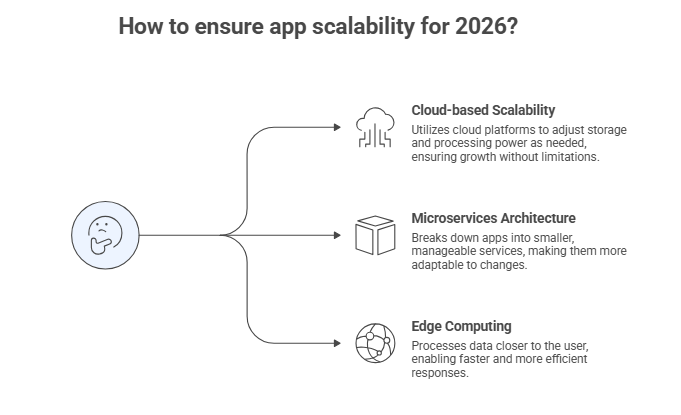
Cloud-based scalability
With cloud computing becoming more ubiquitous, cloud-based mobile apps can easily scale as per demand. By utilizing cloud platforms, developers can adjust storage and processing power as needed, ensuring that the app can grow without limitations.
Microservices architecture
A shift towards microservices architecture allows mobile apps to scale more efficiently. By breaking down large apps into smaller, manageable services, developers can focus on specific components without disrupting the entire system. This also makes the app more adaptable to changes in user needs and future technology.
Edge computing
As 5G continues to expand and the internet of things (IoT) grows, edge computing will become essential. This allows data processing closer to the user, enabling apps to respond faster and more efficiently.
Mobile App Architecture: Building for Flexibility and Growth
When considering mobile app architecture, it’s crucial to select a framework that supports both flexibility and scalability. Some of the most popular mobile app architectures for scalability include:
- Model-View-View Model (MVVM): This pattern allows for a clean separation of concerns, making the app easier to scale and maintain.
- Serverless architecture: As serverless computing becomes more mainstream, this architecture will allow developers to focus more on the code itself while relying on cloud providers for server management. This architecture is ideal for scaling up or down in response to fluctuating demand.
- Cross-platform development: Tools like Flutter, React Native, and Xamarin enable developers to build apps that run across multiple platforms (iOS, Android, Web). This not only cuts down development time but also ensures that the app is scalable across various devices.
Upgrade Your App for 2026: Key Technologies You Need to Know
As we approach 2026, several emerging technologies will play a pivotal role in building scalable mobile apps:
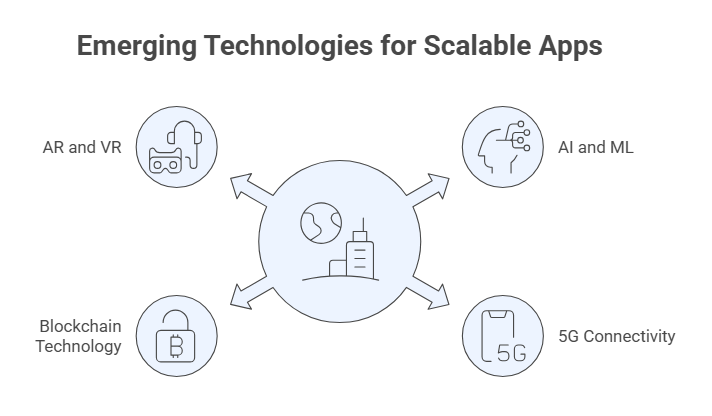
- Artificial Intelligence (AI) and Machine Learning (ML): AI-driven apps are becoming increasingly popular for personalized experiences. From predictive text to advanced recommendations, AI and ML can significantly improve app performance while scaling. Building AI apps for mobile is no longer a future concept it’s becoming a necessity. AI integration in mobile apps will not only enhance user engagement but also optimize app processes like load times and error detection.
- 5G Connectivity: The deployment of 5G networks will bring faster download speeds and low latency, making it easier for mobile apps to handle more data and process it in real-time. This is especially important for apps relying on large volumes of data, such as video streaming or gaming apps.
- Blockchain Technology: With blockchain continuing to gain traction, it offers scalable solutions for securing app data. Whether you’re building a financial app or any app handling sensitive information, blockchain provides an immutable ledger and ensures security at scale.
- Augmented Reality (AR) and Virtual Reality (VR): The demand for AR and VR-based apps is expected to surge by 2026. From gaming to healthcare, these technologies will require efficient app architectures that can handle complex 3D rendering and real-time data processing.
Also Read: Upgrade Your App for 2026
App Development Best Practices for Scalability
To successfully build scalable mobile apps, developers need to follow app development best practices:
- Modular Development: Develop apps using modular principles. Each component should be able to evolve independently, making it easier to scale and update specific features without impacting the rest of the app.
- API-First Design: When building scalable apps, API-first design is crucial. This approach allows apps to communicate with other platforms and services seamlessly. It enables businesses to scale features, integrate third-party tools, and adapt to new technologies over time.
- Load Testing: Regularly conducting load tests ensures that the app performs well under heavy traffic. This is especially important when preparing for events like product launches or high traffic periods, such as holidays.
- Automated Backups and Data Recovery: Ensure that you have a disaster recovery plan in place. Scalable mobile apps should back up data regularly and have a system in place to recover from crashes.
Protecting Your App in a Connected World: Security Measures for Scalability
As apps scale, they also become more vulnerable to cyberattacks. With the increasing reliance on cloud infrastructure, protecting your app in a connected world requires a multi-layered approach:
- Encryption: Encrypt user data both at rest and in transit. This ensures that sensitive information, such as payment data or personal details, remains secure.
- Authentication and Authorization: Implement strong authentication (like biometrics or multi-factor authentication) and ensure that only authorized users have access to certain features or data.
- Real-time Monitoring: Scalable apps must be continuously monitored for unusual activity. Real-time threat detection can help identify and mitigate potential breaches before they escalate.
- Data Privacy Regulations: With laws like GDPR and CCPA gaining traction, ensuring your app complies with privacy regulations is essential, especially as user data grows.
What’s New in App Development? The Future of Mobile Apps in 2026
As we look to the future, 2026 technology trends will drive innovation in mobile app development:
- Quantum Computing: Although still in its infancy, quantum computing promises to revolutionize app scalability by solving complex problems exponentially faster than today’s traditional computers. This technology could open the door to powerful, large-scale mobile apps that were previously unimaginable.
- Wearable Devices and IoT Integration: Apps will need to scale to manage data from a growing number of connected devices. With more wearable tech and IoT devices entering the market, mobile apps will need to collect, analyze, and respond to data from a wider range of sources.
- Voice and Gesture Recognition: As smart assistants like Alexa and Siri evolve, mobile apps will increasingly integrate voice and gesture control. This will create a more intuitive user experience while requiring scalable back-end architecture to process these inputs.
Wrapping Up: Future-Proof Your Mobile App with the Right Partner
Building a scalable mobile app is about more than just keeping pace with the competition it’s about setting the stage for the future. With the right approach to mobile app architecture, adopting cutting-edge technologies such as AI, 5G, and blockchain, and following industry best practices, you’ll ensure your app is not only ready for 2026 but for the years beyond.
When you partner with an experienced team that understands both the present and the future of app development, you gain the confidence that your app will evolve alongside emerging trends and grow seamlessly with your business.
If you’re ready to build an app that’s not only innovative but future-proof, the experts at App Maisters are here to help. With a track record of developing scalable, high-performance apps, we specialize in transforming your vision into reality one that can expand and adapt to whatever the future brings.
Reach out today, and let’s start building the scalable, secure app your business needs to thrive in 2026 and beyond!
FAQs
What does it mean for a mobile app to be scalable?
A scalable mobile app is designed to handle growing user numbers, increasing data, and expanding features without compromising performance. It ensures your app can evolve with your business needs and the latest technological trends. To build a truly scalable app, focus on mobile app architecture, cloud solutions, and modular design.
How do I ensure my mobile app can scale for the future?
To ensure your mobile app scales effectively, prioritize cloud-based infrastructure, microservices architecture, and cross-platform development. These strategies allow your app to grow without bottlenecks. Partnering with experts, like App Maisters, who specialize in scalable mobile app development can help future-proof your app for 2026 and beyond.
What are the best technologies for building scalable mobile apps in 2026?
Key technologies for building scalable mobile apps include AI and machine learning, 5G, blockchain, and cloud computing. By integrating these, you can ensure that your app not only meets current demands but is also equipped for future challenges. App Maisters helps businesses integrate these technologies seamlessly into their app development strategies.
How do microservices architecture help with app scalability?
Microservices architecture allows mobile apps to scale by breaking down the app into smaller, independent components. Each component can be updated or expanded without affecting the overall app, enabling seamless growth. Choosing a skilled development team, like App Maisters, can help you implement this architecture effectively for long-term scalability.
How can I secure my mobile app as it scales?
As your app scales, security becomes increasingly important. Key practices include data encryption, multi-factor authentication, and real-time threat monitoring. Ensuring your app is secure while scaling is a priority at App Maisters, where we implement comprehensive security strategies to protect both your app and users.
Why is cloud-based infrastructure important for app scalability?
Cloud-based infrastructure offers the flexibility to increase or decrease storage and computing power as needed. It helps your app scale efficiently and manage growing user demands without downtime. Working with a custom mobile app development company like App Maisters ensures that your app is built with a robust cloud architecture.
What are the common challenges in building scalable mobile apps?
Common challenges include managing growing data loads, ensuring consistent performance across devices, and integrating emerging technologies smoothly. However, these challenges can be mitigated by using modular development, load testing, and API-first design. App Maisters specializes in tackling these challenges, delivering scalable apps that perform seamlessly as your business grows.