


Predictive Analytics in Mobile Apps for Real-Time Personalization
The mobile app industry has exploded in recent years, with apps constantly evolving to meet the demands of an increasingly digital world. However, while initial downloads may surge after launch, sustaining user engagement remains one of the most significant challenges for app developers.
But what if you could change this? What if your app could not only react to your users needs but anticipate them? This is where predictive analytics steps in. By leveraging the power of data-driven insights, predictive models, and real-time personalization, apps can create tailored experiences that keep users engaged, increase retention, and ultimately boost business results.
In this blog, we’ll dive into how predictive analytics is transforming mobile apps, how real-time personalization can drive engagement, and how companies across industries are harnessing this powerful tool to stay ahead of the competition. We’ll also look at key emerging trends and best practices that can help upgrade your app for 2026.
Why Predictive Analytics Matters in Mobile Apps
Predictive analytics in mobile apps involves the use of advanced machine learning (ML) algorithms, statistical models, and big data to forecast user behavior and deliver personalized experiences. By analyzing historical data from app interactions, predictive analytics can help determine what users are likely to do next, which features they’ll engage with, or even when they’re most likely to drop off.
Predictive analytics can be applied across several key areas of mobile app development, including:
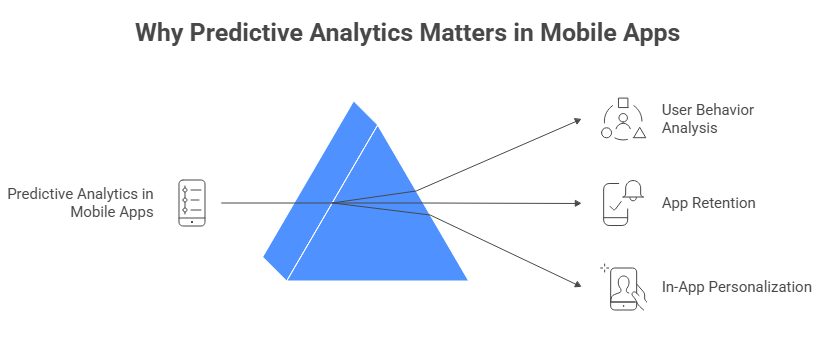
- User Behavior Analysis: By analyzing user patterns, predictive models can suggest features or content that users are likely to engage with, leading to a more personalized experience.
- App Retention: Predictive models can determine the likelihood of a user churning and provide insights into how to retain them before they leave.
- In-App Personalization: By recommending personalized content, products, or services in real time, predictive analytics helps boost user satisfaction and app usage.
Real-Time Personalization: The Key to Engagement
Imagine a user opening your app, and within seconds, it feels like the app understands them perfectly. Whether it’s an e-commerce app recommending products, a fitness app suggesting exercises, or a news app curating articles, real-time personalization powered by predictive analytics can keep users engaged long-term.
Here’s why real-time personalization is crucial:
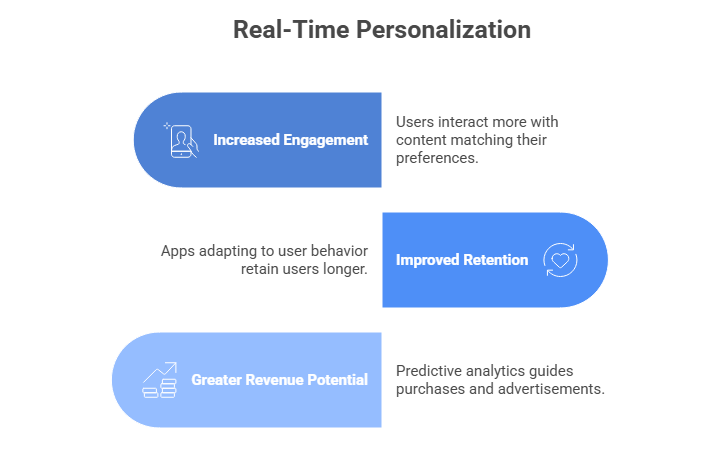
- Increased Engagement: Users are more likely to interact with content that aligns with their preferences.
- Improved Retention: Apps that adapt to a user’s behavior and provide relevant suggestions are far more likely to retain users.
- Greater Revenue Potential: Predictive analytics can guide in-app purchases and advertisements based on a user’s behavior, helping to increase conversion rates and lifetime value (LTV).
By analyzing data in real time, predictive analytics can automatically adapt the user experience showing different features, sending personalized push notifications, or providing contextual recommendations based on what the user is doing at that moment.
How Predictive Analytics Works in Mobile Apps
To understand how predictive analytics is changing the mobile app landscape, let’s break down the core components that make it work.
Data Sources
The first step in predictive analytics is data collection. Apps collect valuable data through:
- User Interactions: Every tap, scroll, and click generates valuable data that can help understand how users are interacting with the app.
- Device Sensors: Sensors like GPS, accelerometers, and gyroscopes offer location-based data and contextual insights that can further personalize the experience.
- Third-Party Integrations: CRM platforms, social media, and other external data sources can help build comprehensive user profiles for more accurate predictions.
Types of Predictive Models
Predictive analytics uses various model types to generate insights. Here are the most commonly used models in mobile apps:
- Classification Models: Used to predict discrete outcomes, like whether a user is likely to engage with a specific feature or churn.
- Regression Models: Predict continuous variables, such as how long a user will stay in the app during a session.
- Clustering Models: Group users based on similar behaviors, helping businesses to create personalized segments.
- Recommendation Systems: These systems predict which products, services, or content a user is most likely to enjoy based on past behaviors.
- Time-Series Models: Analyze trends over time, like seasonal behavior patterns or changes in user activity.
Emerging Predictive Models
While traditional predictive models are already effective, emerging techniques are paving the way for even smarter app experiences:
- Hybrid Models: Combine different techniques (e.g., collaborative filtering and neural networks) to improve accuracy in recommendations.
- Reinforcement Learning Models: These models learn and adapt based on real-time user interactions, perfect for personalized content feeds.
- Federated Learning: This method allows models to train across multiple devices while preserving privacy by not centralizing raw data.
- Edge AI: Allows for real-time decision-making on the device, reducing latency and enhancing the user experience by processing data locally.
Building a Predictive Analytics Architecture for Mobile Apps
Implementing predictive analytics requires a robust architecture to handle the large-scale data processing and real-time decisions. Here’s an overview of the key elements of a predictive analytics architecture:
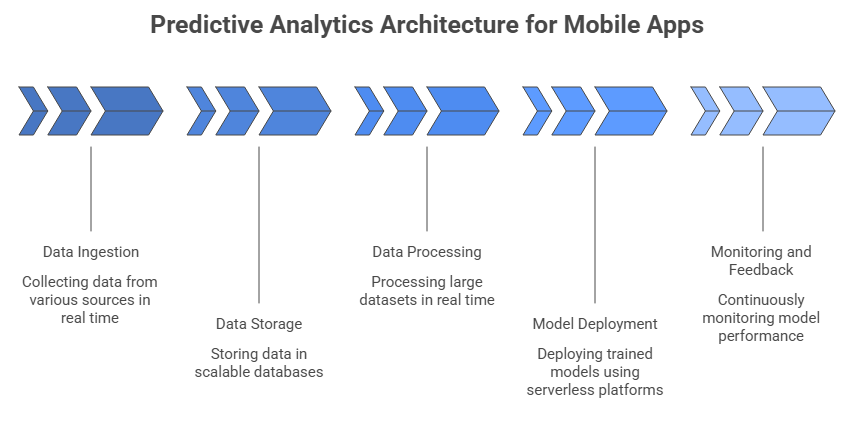
- Data Ingestion: Collecting data from various sources in real time using tools like Apache Kafka or AWS Kinesis.
- Data Storage: Storing data in scalable databases such as Google BigQuery or Amazon Redshift for both structured and unstructured data.
- Data Processing: Using frameworks like Apache Spark or Apache Flink to process large datasets in real time.
- Model Deployment: Deploying trained models using serverless platforms like AWS Lambda or containerized solutions like Kubernetes.
- Monitoring and Feedback: Continuously monitoring model performance and incorporating feedback loops to optimize predictions.
Real-World Applications of Predictive Analytics in Mobile Apps
1. Hyper-Personalized Shopping
Retail applications are using predictive analytics to recommend products based on past browsing and purchasing behaviors. This kind of personalization can significantly boost conversion rates and create a seamless shopping experience for customers.
2. Predictive Wellness and Patient Care
In the healthcare industry, mobile apps are leveraging wearable devices to track health metrics such as heart rate, sleep patterns, and activity levels. Predictive analytics helps provide personalized wellness tips and predict potential health risks, enhancing user engagement with tailored health advice.
3. Personalized Content
Streaming services are employing predictive analytics to offer content recommendations tailored to individual users. By analyzing past behavior, these apps predict what users are most likely to watch next, reducing churn and keeping users engaged for longer periods.
4. Fraud Detection and Personalized Banking
Mobile banking apps are utilizing predictive analytics to detect fraudulent transactions in real time and offer personalized financial advice based on spending patterns. This helps users make smarter financial decisions and strengthens trust in the app.
The Future of Predictive Analytics in Mobile Apps
As we move into 2026, predictive analytics will become even more advanced, with the integration of AI, machine learning, and edge computing. With these technologies, apps will be able to predict and personalize at even deeper levels, delivering real-time experiences that feel intuitive, seamless, and user-centric.
Final Thoughts: Embrace Predictive Analytics with App Maisters
The power of predictive analytics in mobile apps is undeniable. By leveraging AI, machine learning, and real-time personalization, businesses can enhance user engagement, drive retention, and ultimately improve their bottom line. At App Maisters, we specialize in integrating predictive analytics and cutting-edge technology into your mobile apps to help you stay ahead of the curve.
Whether you’re looking to develop a new mobile app or integrate advanced predictive features into your existing app, our team at App Maisters has the expertise and tools to make it happen. Let’s explore how we can transform your mobile app strategy and create a lasting impact for your business.
FAQs
What is predictive analytics in mobile apps?
Predictive analytics in mobile apps uses data, machine learning algorithms, and statistical models to forecast user behavior, enabling real-time personalization and engagement. App Maisters helps integrate predictive analytics into your mobile app strategy to drive growth and user retention.
How does predictive analytics improve user engagement in mobile apps?
Predictive analytics enhances user engagement by delivering tailored content, personalized recommendations, and timely push notifications based on individual user behavior. App Maisters leverages this technology to help your app stay relevant and keep users engaged longer.
Why is real-time personalization important for mobile apps?
Real-time personalization provides a dynamic user experience, adapting content and features based on immediate actions and context, leading to higher engagement and retention. App Maisters can help you implement real-time personalization for better user satisfaction.
How does AI contribute to predictive analytics in mobile apps?
AI enables mobile apps to analyze vast data sets and predict user actions, improving decision-making and content delivery in real-time. App Maisters specializes in integrating AI-powered predictive analytics to create smarter, more personalized mobile experiences.
What types of predictive models are used in mobile apps?
Common predictive models in mobile apps include classification, regression, clustering, recommendation systems, and time-series models. App Maisters applies these models to tailor user experiences and enhance app functionality.
How can predictive analytics help reduce churn in mobile apps?
By predicting user behavior and identifying signs of potential churn, predictive analytics enables you to implement targeted retention strategies before users leave. App Maisters helps build predictive models that keep users coming back to your app.